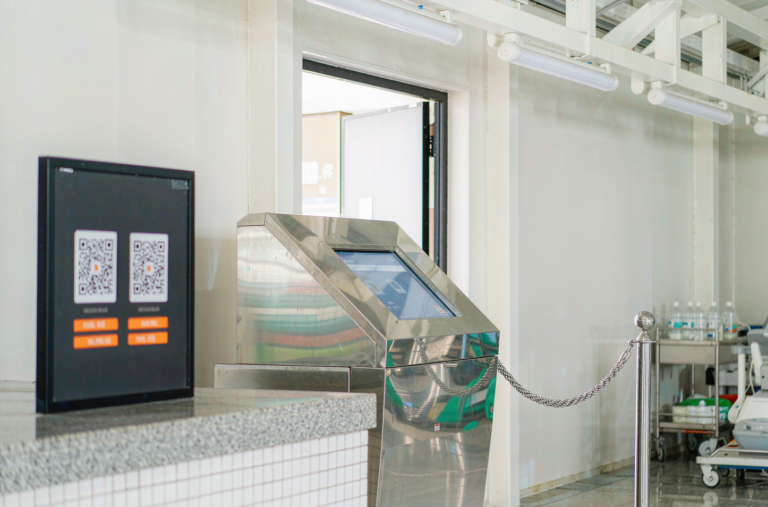
Luohu District Traditional Chinese Medicine Hospital
What a District TCM Hospital Offers Foreign Patients in Shenzhen
Traditional Chinese Medicine in China is not a single clinic or a fringe practice; it is an institutional clinical discipline housed inside public hospitals, including dedicated TCM hospitals at the tertiary (三级甲等 / 3A) level. Luohu District Traditional Chinese Medicine Hospital (深圳市罗湖区中医院) is a district-level public TCM hospital in the Luohu district, near the Hong Kong border. It illustrates what a district TCM hospital typically provides: acupuncture, TCM internal medicine, TCM orthopedics, and related conservative care. This article uses it as an example of the hospital type and explains how a foreign patient can approach a visit. It is general information, not a personal recommendation, and not a claim that any hospital is better than another. The specific services available on a given day are determined by the hospital.
How a District TCM Hospital Differs From a General Hospital
A district TCM hospital shares the public 3A framework — licensing, accreditation, and safety oversight — with general hospitals, but its clinical centre of gravity is Chinese medicine. Most such hospitals also provide baseline Western-medicine diagnostic support, such as imaging and laboratory testing, so that the two systems can be used together. The difference a patient notices is orientation: the senior departments, the research emphasis, and much of the hospital’s reputation rest on TCM disciplines. For a foreign patient interested in acupuncture or conservative musculoskeletal care, this type of hospital is where the deepest TCM expertise usually sits. It should be understood as an example of a hospital type rather than an endorsed guarantee of any specific outcome.
Key Department: TCM Internal Medicine
TCM internal medicine is the core of a TCM hospital. Physicians take a pattern-based history — tongue examination, pulse reading in the traditional manner, and a diagnosis expressed as imbalance rather than always as a single Western disease label — and prescribe a course of herbal medicine adjusted at follow-up. For foreign patients, the most important habit is to ask what each prescription is for in terms you understand and to keep a written record with the Latin or pinyin names of the herbs. Herb-drug interactions are a genuine concern, so the hospital setting — where prescribing is documented and materials are sourced under controls — is materially safer than informal suppliers. Our guide to Traditional Chinese Medicine for foreigners covers the evidence and safety questions in more depth and is a useful read before a first consultation.
Key Department: Acupuncture
Acupuncture is the TCM modality with the broadest international research support, particularly as a complementary approach for certain chronic pain conditions and some nausea-related complaints. In a district TCM hospital, acupuncture is delivered by licensed physicians within a clinical documentation framework, so each session becomes part of your medical record. A typical course involves repeated sessions over several weeks, with the physician adjusting point selection based on your response. Foreign patients should not expect acupuncture to replace biomedical diagnosis for acute or serious conditions; it works best as a complementary layer used alongside, not instead of, needed Western care. As always, discuss any new therapy with your physician, especially if you take anticoagulants or have a bleeding disorder.
Key Department: TCM Orthopedics (正骨)
TCM orthopedics, including 正骨 (bone-setting) and tuina therapeutic massage, is a distinctive strength of TCM hospitals and is relevant to foreign patients with musculoskeletal complaints, postural issues, or recovery needs after injury. The approach combines manual correction, therapeutic massage, and sometimes herbal external applications, and it is typically used alongside imaging to confirm what is being treated. It should not be confused with emergency fracture care, which belongs in a surgical or orthopaedic department. TCM orthopedics is best understood as conservative musculoskeletal management, and a responsible physician will use imaging and refer out when a problem is outside the scope of manual therapy. Treatment decisions should always be made with licensed physicians.
Advantages for Foreign Patients
Several features make a district TCM hospital a reasonable option. It sits inside the public 3A system, which means consistent oversight. TCM consultations are generally lower-cost than equivalent private Western specialist care, though final costs are determined by the hospital and depend on the course prescribed. The location in Luohu, near the Hong Kong border, is convenient for patients crossing from Hong Kong. And the integrated setting supports combined care when a TCM physician needs to coordinate with Western-medicine departments. None of this should be read as a claim that any hospital is superior to another; it is a description of what this type of institution generally provides.
Practical Visiting Information for Foreigners
Foreign patients register at public Shenzhen hospitals with a valid passport, and some hospitals ask for a local phone number and proof of stay. Appointment booking increasingly supports passport-based registration, often through an international or medical-services desk that can manage the process. Language support at district TCM hospitals may be more limited than at the large international-facing institutions, so arranging interpretation in advance is sensible. Payment is usually at the hospital by card or mobile payment, and itemised receipts should be kept for any insurance claim. Because workflows differ, confirming the required documents and the correct desk before arriving prevents a wasted trip. Our Shenzhen medical escort service can handle passport registration, appointment booking, and in-hospital accompaniment.
How Coordination Helps With TCM Care
The parts of a TCM hospital visit that are easiest to lose are the logic and the follow-up. A coordinator confirms which department fits your need, books under the passport, accompanies you so questions are asked and answered, and translates the prescription into a written record you can show your home physician. This is especially useful for TCM, where the pattern-based reasoning is hardest to convey across languages. Coordination does not alter medical judgment, which remains with the licensed physicians; it simply makes the system navigable. If you want to plan a visit, you can start a planning conversation with our team.
Frequently Asked Questions
Is a district TCM hospital suitable for a first-time foreign patient?
Yes, for appropriate uses such as acupuncture or conservative musculoskeletal care, provided you plan interpretation and bring your medical history. A TCM hospital is not a substitute for emergency or surgical care, and serious or acute conditions should be managed in the relevant Western-medicine department.
How should I prepare for an acupuncture course?
Bring a list of current medications, a summary of the condition being treated, and allow for several weeks of repeated sessions rather than a single visit. Ask the physician for the expected course and its review points, and keep written records of each session.
Can TCM interact with my medications?
Yes, sometimes significantly, particularly with blood thinners and blood-pressure drugs. Disclose everything you take to both your TCM physician and your regular doctor, and use herbs only from a licensed hospital source with proper labeling.
What will the visit cost?
Public-hospital TCM care is generally modest relative to private clinics, but final costs are determined by the hospital and depend on consultation type, the herbal course length, and any additional therapy such as acupuncture. Ask for the expected course rather than only the per-visit fee.
Related Hospitals in Shenzhen
Foreign patients often compare several hospitals before deciding where to be seen. These Shenzhen 3A hospitals are commonly considered alongside Luohu District TCM Hospital:
- Shenzhen People’s Hospital — Shenzhen’s first 3A hospital, with broad strengths in cardiology, hepatobiliary surgery, and oncology.
- Luohu District People’s Hospital — A Luohu district hospital near the Hong Kong border, known for reproductive medicine (IVF).
- The University of Hong Kong–Shenzhen Hospital — A HKU-operated hospital known for package pricing and a foreigner-friendly, bilingual environment.
Related Reading
A Note on Scope
This article describes how visiting a district Traditional Chinese Medicine hospital generally works for foreign patients in China and is provided for general information only. It is not medical advice and is not a guarantee of any hospital’s availability, pricing, or outcomes. Treatment decisions should always be made with licensed physicians. For our general position, see the medical disclaimer.
If you want help coordinating a hospital visit in China, our Shenzhen medical escort team can handle appointment booking, passport registration, and in-hospital accompaniment. Start with a planning conversation.