Hainan Boao Expanded Access Drugs and Devices: What Foreign Patients Can Actually Apply For
A Tuesday Morning at the LeCheng Counter
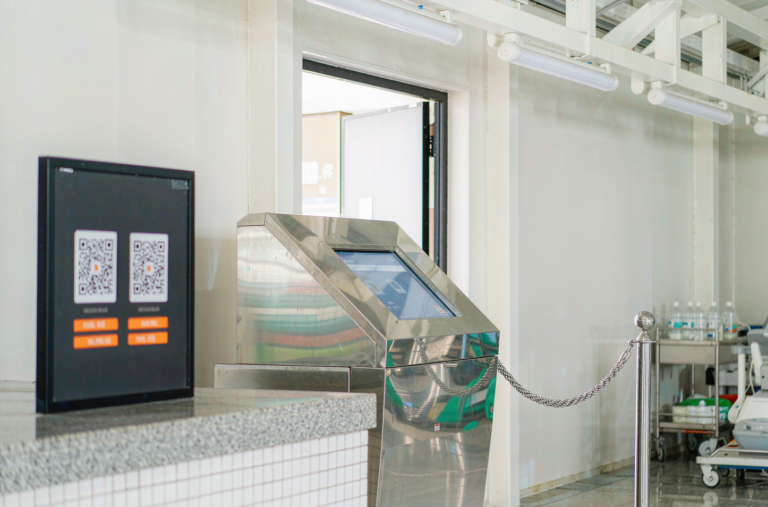
The first thing I tell anyone who arrives at a Hainan pilot zone hospital expecting a pharmacy shelf is that there is no shelf. The medication that brought them to Boao is not sitting in a cabinet with a price tag. It arrives through a licensed import route, on a paper trail that starts in a specialist clinic in the morning and, if everything lines up, ends at a dispensing window later in the week. People who have been sold a dream online picture a shop they can walk into. They get a file.
I have stood at that counter with patients from Malaysia, from a construction company in the Gulf, from a clinic in Nairobi that had already tried to refer a patient elsewhere and been quoted a price with no itemisation. Almost every one of them had the same misunderstanding: they thought they were buying a product. In fact they were applying for a use.
This article explains what that sentence means in practice. It covers how China’s only medical special zone works, who can qualify for drugs and devices that have not been released nationally, what documents are actually read by the hospital committee that approves them, how long the process runs, what it costs, and the ways foreign patients lose money or time before they ever get to Qionghai. It does not promise that any product is available, and it does not promise outcomes. It describes a pathway.
What “expanded access” means in China, and what the phrase hides
Every country has some route for a patient who needs a medicine or a device before the normal approval machinery has finished. In the United States it is called expanded access; in the European Union there are named programmes with strict conditions. China runs a different arrangement, and the difference matters if you are planning treatment from abroad.
In mainland China, a product reaches patients by one of two doors. The first is standard marketing authorisation from the National Medical Products Administration, usually abbreviated NMPA. Once a drug or device has an NMPA approval, hospitals may stock and prescribe it under the national and provincial formulary system. The second door is the pilot zone in Boao, Hainan, where the same products may sometimes be supplied before or outside that national rollout, because the zone operates under a special arrangement granted at the level of the State Council and implemented by the NMPA, the National Health Commission and Hainan province.
The mechanism inside the zone has its own Chinese name, and it is usually rendered into English as “categorically approved” or “special” imported drugs and devices. The English phrase “expanded access” is convenient but imprecise, and using it loosely is where a lot of patient disappointment begins. Three clarifications save weeks:
- First, access is granted to a treatment plan for a named patient, not to a product in general. The same molecule may be available this month and unavailable next month if the hospital’s import quota, the product’s supply situation, or the diagnosis coding changes.
- Second, the medicine is supplied by a licensed hospital. It is not dispensed over a counter, it cannot be posted to you, and it cannot be taken home in your luggage. Possession and personal import of unapproved medicines triggers the same customs and pharmaceutical rules that apply anywhere else in China.
- Third, the zone does not license doctors. The specialists who assess you must hold licenses that allow them to practise in that hospital, and they work inside the hospital’s own pharmacy and procurement structures.
Being clear on those three points does not make the pathway less useful. It makes it survivable, because the alternative is discovering them at the airport on your way out.
How an unapproved drug reaches a patient inside the pilot zone
The pathway is administrative long before it is clinical. A patient who arrives with a foreign diagnosis packet cannot simply be matched to a product by the front desk. The sequence looks roughly like this, though the order of steps varies between hospitals and between product categories.
- Registration and clinical assessment. You register at the hospital, usually through the international department or a dedicated foreign-patient counter. A physician with the relevant specialty reviews your history, examination findings and prior imaging. Nothing is matched to a product at this stage.
- Diagnosis confirmation. If the working diagnosis came from another country, it usually has to be re-confirmed locally. Chinese hospitals are cautious about treating a foreign patient on foreign records alone, partly for clinical reasons and partly because the import application asks for a diagnosis that the hospital can stand behind.
- Product eligibility check. The hospital’s pharmacy or medical-device committee checks whether the specific product falls inside the zone’s current permitted list and whether the approval covers your indication, dose and age. This is where many enquiries die, quietly, without anyone telling the patient.
- Import application. For an unapproved product the hospital, not the patient, files the import and use application with the regulators and the provincial authority. You are the beneficiary of a filing. You are not the filer.
- Supply and hospital pharmacy release. Once the import clears, the product is stored and dispensed by the hospital. Use happens in the hospital or under its direction.
- Follow-up inside the system. Data from the use may be collected under the zone’s real-world evidence arrangements. Whether you are asked to contribute is a separate decision that you can decline.
Note who appears in that list. There is no line where a patient pays a broker, signs a supply contract, or receives a parcel. If a website offers to “ship the medicine to your hotel” in Hainan, the part that is untrue is the shipping.
Who is eligible, and who is not
Eligibility is narrower than the marketing around medical tourism in Asia suggests. The zone exists to serve patients whose condition is not adequately served by existing domestic options, and the hospitals apply that test rather loosely in the brochures and rather strictly in the committee room.
In practical terms, a foreign patient usually needs all of the following:
- A diagnosis that has been confirmed by a licensed Chinese physician at the treating hospital, not merely asserted in a foreign report.
- Evidence that the condition, or the specific symptom cluster, has not been controlled by the standard domestic alternatives, or that the standard alternatives carry unacceptable risk. This is the part that trips people up: “my drug is not approved in China” is not the same as “my drug is not appropriate for me”.
- A product that is genuinely in the zone’s permitted scope for the indication you have, at the dose and route you need.
- The ability to be physically present for the assessment and the follow-up visits the hospital requires, because this is not a mail-order model.
- A way to pay, which almost always means self-funding or a private policy, since foreign visitors do not normally hold Chinese health insurance.
What the pathway is not good for is also worth stating plainly. It is not a shortcut for healthy people who want the newest wellness injection. It is not a route for stems cells marketed as anti-ageing. It is not a way to obtain a controlled substance for personal resale. It cannot substitute for a surgery that a domestic hospital can perform and schedule. Patients who arrive with those expectations consume consultation time, hospital committee attention and, for the hospitals, a licence risk they are not willing to take.
The documents that decide whether the file moves
From the number of files I have watched stall, the failure is rarely the medicine. It is the paperwork. A file that arrives complete moves; a file that arrives thin waits weeks for a fax that no longer exists.
Bring originals and clear scans of the following, in English, with the pages bound and labelled:
- Passport data page and every entry/exit stamp page relevant to the current stay. The name on the passport must match the name on every other document, including the Chinese hospital’s registration card. Pinyin spelling mismatches, an extra middle initial, an old passport renewed without updating the record — each of those creates a separate query.
- Visa or entry permit, and the residence registration if the hospital asks for it. People often arrive here from the article on China medical visa categories, which is the right starting point, but the visa question does not end at the border: the zone wants to know how long you intend to stay during the assessment.
- Foreign diagnosis letters from the treating specialist, on hospital letterhead, stating diagnosis, stage or severity, dates of treatment, and what has already been tried.
- Complete pathology and imaging reports, not just the summary. CD or USB copies of imaging are far more useful than paper film, because the radiologist who reviews them needs to open the source files.
- A written list of current medications with doses, including anything bought without a prescription in your home country.
- Prior authorization correspondence, if a private insurer has already said no. Hospitals will read it, and it tells them what you have exhausted.
- Contact details for the doctor who referred you, who may be called. Keep them reachable during China time, not your home time.
One detail catches people: photographs of documents on a phone are acceptable for triage, but the hospital copy should be a clean scan at a reasonable resolution. A blurry photo of a prescription label is worse than no photo, because it invites a second round of questions.
How long the pathway takes
Timing is the single biggest planning failure for foreign patients. The clinical assessment is the fast part. The administrative tail is not.
- Day 1-2: registration, review of records, initial consultation, and a decision on whether the case is even plausibly in scope. Most first visits end with a no or a maybe.
- Day 3-10: confirmatory assessments, additional imaging or labs, and sometimes a second specialist opinion from another department.
- Week 2-4: the hospital committee and the import filing. This is the part nobody quotes, and for products that are not already in the zone’s standing approach it can run longer.
- Week 3-8 or beyond: supply and first use, depending on manufacturing and import clearance.
Build your trip around the slow end. If you are flying in on a single round-trip ticket and assuming one week, you will be buying extra nights at the end, in a small town, possibly alone. Patients who plan a first short trip for assessment and a second visit for the treatment itself are almost always better off, and cheaper.
There is also a difference between what a hospital can do for a patient already inside the country and what it can do for someone still abroad. Applications that begin before the patient arrives, with full records, do compress the timeline. Applications that begin after a holiday booking do not.
What it costs and who pays
Three price layers exist, and conflating them is how a patient ends up surprised.
The first layer is the hospital encounter: registration, consultation, confirmatory tests and any stay. These are priced like private or international-department care in a Chinese hospital and are billed in RMB. The second layer is the product itself, which under this pathway is supplied by the hospital as part of treatment; the price is set by the product, the import arrangement and the dose schedule, and it is frequently higher than the same molecule’s price once it is widely available in China. The third layer is everything around the medical care: transfers between airports and Qionghai, a place to stay for weeks rather than days, interpreters, and the follow-up trip.
On costs, treat any figure you were quoted online as a marketing number. Our own figures for this article are estimates only, and the rule we apply on this site is that final costs are determined by the hospital. What you should insist on instead of a headline number is a written quotation that itemises: consultation, confirmatory tests, the product by name and dose, the number of cycles or the length of the course, storage and administration, follow-up visits, and what happens if the product does not clear import. A genuine hospital quote reads like an invoice. A broker’s quote reads like a discount.
Payment is where I send people next, because the money rarely comes back if the plan changes. Most foreign visitors pay out of pocket in RMB, though international-department desks in larger cities can usually take a foreign card for the deposit portion. If a private insurer or an employer policy is covering you, the invoice has to be issued in a form that carrier will accept, which brings you into the hospital invoice and reimbursement process. Ask the billing desk for the itemised invoice format before you pay the deposit, not after. Rewriting an invoice later is possible and slow.
One more consideration on money: Chinese hospitals will not price-shop for you across hospitals in the zone. Comparing two offers usually comes down to product availability rather than price, and the lower quote is sometimes for a different product altogether.
Devices, diagnostics and the real-world data arrangement
Drug access gets the attention, but the device side is often more interesting clinically and less understood. Inside the zone, certain imported devices and diagnostic tools that are not yet nationally available can be used under the same framework. That covers a range: imaging and pathology instruments, specialty surgical equipment, and in some cases devices that are still being evaluated in China’s own registration process.
Two practical points follow. First, device availability can expire faster than drug availability. A manufacturer may place devices in the zone for a defined period as part of an evaluation, and the window closes. Second, because these are evaluation-period placements, the device may be intended for collected data as much as for the patient in front of you.
That second point deserves an honest paragraph, because the real-world data arrangement is the part of the pilot zone with the clearest national importance. Use of products inside the zone generates clinical data that the regulator has, in specific circumstances, accepted as supporting evidence for later approval decisions. It is a legitimate reason the zone exists and it is why manufacturers participate. It is also a reason to ask questions before you sign anything.
If you are approached with a form that assigns clinical data from your treatment to a manufacturer or a research sponsor, read it with someone who is not being paid to cheer. You can decline. You can also ask what is collected, whether your identity is separated from the data set, and whether the record follows you if you later treat in another province. Those questions are normal, and a hospital that runs the pathway properly will answer them without irritation.
Five things foreign patients get wrong
These five account for most of the damage I have seen around this pathway.
- Believing a broker can obtain a product. The application is filed by the hospital. A broker’s leverage is limited to persuading a hospital to see you, and that is a consultation fee, not access to a drug.
- Assuming the medicine comes home with you. Unapproved products supplied through the zone are for use at the hospital under its arrangement. Carrying them out of the country is a customs and pharmaceutical problem, and the consequence is not a fine you can budget for.
- Arriving with a diagnosis, not a file. A letter that says “please assess” is not the same as records that let a physician decide. Bring imaging on a disk and a medication list with doses.
- Planning a single trip. The pathway frequently needs two visits. Book the second one before you leave, and keep the first ticket short and changeable.
- Expecting the zone to replace a treating team. For most conditions the sensible plan uses the zone for what it does well, then hands the long game back to specialists in the city where you live or where your insurer’s network sits. There is a useful version of this in the Hainan Boao medical tourism zone guide for orientation, but orientation is not a treatment plan.
Fitting the zone into a bigger China treatment plan
The pilot zone sits inside a country with unusually strong hospital depth outside Hainan. That combination is the real argument for coming, and it is worth being precise about it.
What the zone offers that elsewhere in China does not: access to a specific product or device ahead of national availability, under a defined legal route. What Shenzhen, Guangzhou, Shanghai and Beijing offer that the zone does not: subspecialist density, surgery volume, insurance-facing billing, and the convenience of being near an airport with direct flights. A realistic plan for a complex condition often looks like a diagnostic and product-access trip to Hainan followed by surgery or long-term follow-up in a large city, or the reverse: stabilisation in a mainland hospital and a return to Hainan for a later-stage option.
Arrange that sequence before you travel. If the product route fails, you need a fallback that does not depend on rebooking flights. If it succeeds, you need the follow-up defined in writing, including who holds the records and how they will reach your home doctor. Two things to fix in advance: agree in writing who receives the final report and in what form, and confirm whether your records will be issued in Chinese, English or both, because the translation question is the one patients discover at the airport on the way home.
If you are using a second-opinion route to decide whether this is worth doing, be careful that the opinion is independent. A second view from a physician who has no stake in the product is worth more than an enthusiastic yes from someone whose fee depends on you proceeding.
Frequently Asked Questions
Can I buy the medicine in Hainan and take it back to my country?
Not through this pathway. Products supplied inside the pilot zone arrive through a licensed hospital import route and are for use in that treatment plan. Taking them out of China puts you in the same position as anyone carrying unapproved or unlicensed medicine across a border: the customs and national pharmaceutical authority decide, and the outcome is unpredictable. If you need the product at home, the honest route is to ask your own doctor to seek an import or compassionate-use pathway in your own country. Some countries allow that; some do not. Assume nothing.
How do I know whether my condition qualifies?
Only the treating hospital can answer that, and it answers it after a consultation, not from an email. What you can do is screen honestly before you book: confirm that a specialist at the hospital treats your condition at all, confirm that the specific product you have heard about is within the zone’s current scope for that indication, and be ready to hear that your case is better served by an approved domestic treatment. If a website answers this for you without asking about your diagnosis, it is sales copy.
Do I need to speak Chinese?
No, but you need a good interpreter, and you should arrange the same one across visits. Specialty conversations inside this pathway involve doses, adverse effects and follow-up intervals, and interpreters who translate advertisements will not translate a dose. Ask the hospital whether a qualified medical interpreter is available for the consultation, or bring your own and brief them beforehand.
Will Chinese insurance or my overseas insurer pay?
Tourist visitors normally do not hold Chinese health insurance, so the default is self-payment in RMB. If you are on a Chinese residence permit with a policy, or a private international plan, the invoice format decides whether you are reimbursed. Insist on an itemised invoice issued in the name on your policy, and check with the insurer whether products supplied under a special zone arrangement are covered, since some policies exclude drugs that were not obtained through an approved pharmacy network.
Planning care in China? Our comprehensive Medical Tourism in China guide covers visas, costs, top hospitals by city, language support, accommodation near hospitals, and insurance.
A Note on Scope
This article describes a regulatory pathway and the practical steps foreign patients go through to reach it. It is not a recommendation for any treatment, it is not a list of available products, and it does not promise that any drug or device can be obtained for you. Availability inside the pilot zone changes as regulators, manufacturers and hospitals change their positions, and the only statement that stays true is the one the hospital tells you in writing. Costs stated here are estimates only; final costs are determined by the hospital.
I am Karl Huang, technical director at Tianyou Medical Research Institute, a certified health manager and a China-based medical escort, and an advisory consultant at Zhong An Kang Hua clinic. My affiliation is disclosed because several of the topics on this site touch our own practice. We do not sell products through this website, and nothing here should be read as a claim that a particular treatment will work for you. Treatment decisions belong to the licensed physicians who examine you, and any hospital that takes a patient on this pathway will tell you the risks in writing before you agree to anything.
If you are weighing a trip to Hainan against treating at home, talk to a physician who can see your records, not to a booking agent. Bring the questions in this article with you: which product, which indication, which dose, which committee, which written quote, which fallback if the import does not clear. Those six questions are the difference between a plan and a hope.
This article is general information about travelling to China for care. It is not medical advice, and it is not a substitute for a consultation with a qualified clinician who knows your history. Read the site’s medical disclaimer before acting on anything here, and read our editorial policy to see how material on this site is produced, reviewed and corrected. Foreign patients seeking care in China should confirm visa status, licensure of the treating hospital, and the scope of any consent or data form before signing anything.