Hair Loss Treatment in China for Foreigners: Clinics, Costs, and What to Expect
Why Foreign Patients Explore Hair Loss Treatment in China
When people think about traveling to China for medical care, they usually picture complex surgery or a serious diagnosis. Hair loss rarely makes the headlines, yet it is one of the most common reasons expats, international students, and short-term visitors end up in a dermatology clinic during their stay. The triggers are familiar: stress from a relocation, a new climate, changes in diet, or simply the slow realization that the same shampoo and supplements that worked back home no longer seem to help.
I have sat across the consultation table from engineers on three-month assignments in Shenzhen, from doctoral candidates in Shanghai who noticed thinning patches during their first winter, and from retirees who combined a hair consultation with a broader health check. The good news is that China’s dermatology system is large, well organized, and far more affordable than equivalent private care in Western Europe or North America. The confusing part is learning how to navigate it as a non-Chinese speaker who may only be in the country for a few months.
This guide walks through what actually happens: how Chinese clinics name the problem, where to go, what the first visit costs, which treatments are approved and prescribable, and what a hair transplant really involves. None of it is a promise of results. Hair regrowth depends on the cause, your age, and how early you start. What you can count on is a clear, regulated pathway.
How Clinics in China Classify Hair Loss
Before any treatment, a Chinese dermatologist will usually sort your hair loss into a category, because the plan changes completely depending on the diagnosis. The three patterns you will hear about most are androgenetic alopecia (male or female pattern thinning), alopecia areata (round, sudden bald patches linked to immune activity), and telogen effluvium (diffuse shedding after stress, illness, or surgery).
A practical detail that surprises foreigners: scalp conditions such as seborrheic dermatitis and fungal infection are extremely common and can mimic hair loss. A clinic will often treat the scalp first, because shedding caused by inflammation often improves once the skin calms down. If you arrive assuming you need a transplant but actually have an untreated scalp infection, a responsible dermatologist will tell you so.
Expect the doctor to look at the distribution of thinning, check nearby hairs under magnification, and ask about timing. A patch that appeared in three weeks points in a different direction than gradual recession over three years. Being specific about when you first noticed change saves you a return visit.
Public Tertiary Hospitals vs. Private Dermatology Clinics
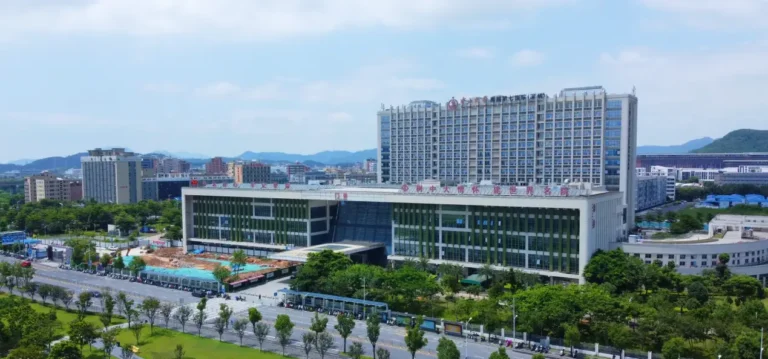
China runs two parallel tracks. The first is the public tertiary hospital system, where large dermatology departments in China sit inside major teaching hospitals. These are where the most experienced specialists work, where lab tests are done on site, and where prescription prices are set by the state. The trade-off is the famous queue: registration opens early, popular specialists book out, and you may wait.
The second track is private dermatology and hair clinics, concentrated in Beijing, Shanghai, Guangzhou, and Shenzhen. They offer same-week appointments, English-friendly reception, and a calmer waiting room, usually at two to four times the price of the public route. For a straightforward consultation and prescription, the public hospital is hard to beat on value. For a hair transplant, where the procedure itself is the product, many foreigners compare both and choose on price, location, and before-and-after photos rather than on hospital prestige.
Either way, confirm the clinician is a licensed dermatologist, not a beauty technician. Hair loss sits on the boundary between medicine and cosmetics in every country, and China is no exception. A medical license is what lets a prescription be written and what protects you if something goes wrong.
What the First Consultation Actually Involves
A typical first visit runs like this. You register at the hospital app or window, pay a registration fee, and are assigned to a dermatology number. When your turn comes, the doctor examines your scalp, often with a handheld trichoscope that projects magnified images onto a screen so you can see the follicles yourself. This single step clears up a lot of anxiety, because you can watch the doctor point out miniaturized hairs versus healthy ones.
Depending on your history, the doctor may order bloodwork the same morning. The standard panel looks at thyroid function, ferritin (stored iron), vitamin D, and sometimes sex hormones. These are not exotic tests; they are the routine workup because treatable deficiencies are a common, overlooked cause of shedding. Results frequently return within a few hours at a large hospital, or the next day at a smaller one.
As a rough planning figure, a first public-hospital visit including registration, specialist fee, trichoscopy, and basic bloodwork often lands in the range of RMB 400 to RMB 1,000. Estimates only — final costs are determined by the hospital. Private clinics quote higher and usually bundle the consult into a package.
Medications You Can Get Through a Chinese Prescription
China follows international treatment norms, and the medications are the same families you would encounter in Europe or the United States, approved by the National Medical Products Administration (NMPA). Topical minoxidil, a liquid or foam applied twice daily, is the front-line option for pattern thinning and is available without the same restrictions as oral drugs, though a pharmacist will still advise you. Oral finasteride for men and spironolactone for women are prescription-only and require a doctor’s assessment, because they are not suitable for everyone and carry documented side effects that your clinician should review with you.
For alopecia areata, localized corticosteroid injections or topical immune-modulating creams are common first steps. None of these are instant. Dermatologists in China are candid that meaningful change, if it comes, usually takes three to six months of consistent use, and that response varies widely between patients. You should hear this framing at the clinic; if someone guarantees regrowth in two weeks, that is a signal to walk away.
Monthly medication costs in China are generally modest. A month of topical minoxidil often runs RMB 60 to RMB 150, while a month of oral finasteride frequently falls between RMB 100 and RMB 300 depending on the brand and dosage. Estimates only — final costs are determined by the hospital.
PRP, Laser, and In-Clinic Procedures
Beyond pills and liquids, many Chinese clinics offer platelet-rich plasma (PRP) therapy, where a small sample of your own blood is spun down and the concentrated plasma is injected into the scalp. Low-level laser therapy, delivered through in-clinic caps or combs, is also widely available. These sit in a middle zone: they are medical procedures, they are popular, and the published evidence for meaningful regrowth is mixed rather than conclusive.
A single PRP session in a major city typically costs RMB 1,500 to RMB 4,000, and clinics usually propose a course of three to six sessions spaced weeks apart. That adds up, which is why it pays to ask upfront how many sessions are recommended and what the total package price is before you commit. Treat any clinic that pressures you into a large prepaid block on the first visit with caution, and keep your own written record of what was agreed.
Hair Transplant Surgery in China
Hair transplantation is where China’s scale becomes an advantage. Follicular unit extraction (FUE), the method that moves individual grafts without a linear scar, is the standard in reputable clinics, and the country has a deep pool of surgeons who perform high graft counts daily. Major hubs are Beijing, Shanghai, Guangzhou, and Chengdu, with Shenzhen close behind.
The consultation matters more than the brochure. A trustworthy surgeon examines your donor area (the back and sides of the head), estimates how many grafts are realistic, and tells you honestly whether your expectations match your biology. Pricing is almost always per graft. In China that often works out to roughly RMB 8 to RMB 15 per graft, so a procedure moving 2,000 grafts might fall in the RMB 16,000 to RMB 30,000 range. Estimates only — final costs are determined by the hospital, and the figure should include the surgery, anesthesia, medications, and follow-up visits rather than just the grafts.
Plan your trip around the recovery. The transplanted area is tender for a week, the scabs shed around day ten, and the shed-then-regrow cycle means the real result is not visible for several months. If you are flying in, book at least a week on the ground and confirm in writing what post-operative care the clinic provides after you fly home.
The Traditional Chinese Medicine Route
A distinct option in China is traditional Chinese medicine for foreigners, which approaches hair through scalp massage, herbal preparations, and acupuncture rather than pharmaceutical blockers. Many patients use it alongside, not instead of, conventional dermatology. It is worth understanding what TCM can and cannot claim: practitioners describe it in terms of circulation and balance, and you should not expect a TCM clinic to promise regrowth or to cure a genetically driven pattern of thinning.
If you try this route, choose a hospital-affiliated TCM department rather than an unlicensed shop, and tell your dermatologist so your treatments do not conflict. Keeping both clinicians informed is simply safer, especially if you are also taking prescribed medication.
Language, Documents, and Day-to-Day Logistics
The single biggest friction point for foreigners is not the medicine, it is the paperwork and the language. Hospital apps, consent forms, and lab reports are in Chinese, and while front-desk staff in international cities speak some English, the specialist often does not. This is where medical translation and interpretation services earn their fee: a trained interpreter in the room changes the quality of the diagnosis you receive, not just your comfort.
Bring your own records. If you already saw a dermatologist at home, carry the diagnosis letter, the names of any medications (with dosages), and recent blood results. A translated summary saves the clinic from repeating tests you already have, shortens your visit, and reduces cost. Keep digital copies in your phone and a paper copy in your bag, because hospital Wi-Fi can be slow.
For longer treatment courses, ask the clinic whether a prescription can be refilled remotely or whether you must return in person. Some medications require a fresh consultation each time, and knowing this before you book your flight home prevents a gap in treatment.
Frequently Asked Questions
Can I get a prescription on the first visit?
Often yes. If the diagnosis is straightforward, a dermatologist can write a prescription the same day after the examination and any ordered bloodwork. If the picture is unclear, the clinic may ask you to return once results are in, which is normal and not a sign of poor care.
How much does a hair transplant cost in China?
Pricing is usually per graft, commonly around RMB 8 to RMB 15 each, with total procedure costs frequently between RMB 16,000 and RMB 30,000 for a typical session. Estimates only — final costs are determined by the hospital, and you should request a written breakdown that covers surgery, anesthesia, medications, and follow-up.
Is minoxidil available without a prescription?
Topical minoxidil is broadly available in Chinese pharmacies and online, but a pharmacist should still advise you on proper use and side effects. Oral treatments such as finasteride are prescription-only and require a doctor’s assessment.
Do I need a special medical visa for hair treatment?
China does not have a dedicated medical visa category. Most foreigners handle hair consultations and procedures on a standard visitor, business, or stay permit that matches their reason for being in China, and the treatment is fitted around that status. If you are unsure which entry type fits your trip, review the guidance on medical travel and visas before you book.
A Note on Scope and Affiliation
This article is written for general education about how hair loss care works in China. It is not a substitute for an in-person diagnosis, and it does not guarantee any specific outcome. Treatment decisions should be made with a licensed dermatologist who can examine you directly. The author, Karl Huang, serves as technical director at the Tianyou Medical Research Institute and as a consultant at Zhong’an Kanghua Clinic; where a treatment is described, it reflects standard clinical practice rather than a recommendation for any single provider. Readers should review our medical disclaimer and our editorial policy for the full boundaries of this content. Cost figures are estimates only — final costs are determined by the hospital.