Male Infertility Treatment in China for Foreigners
Why Foreign Men Get Evaluated for Infertility in China
A couple is diagnosed with infertility when they have not conceived after twelve months of regular, unprotected intercourse, or after six months if the woman is over 35. What surprises many people who arrive at a Chinese hospital is how often the investigation points back to the man. In roughly four out of ten couples with trouble conceiving, a male factor is part of the picture, and in many cases it is the only finding. I have sat with expatriates in Shenzhen clinics who assumed the work-up would focus entirely on their partner, only to learn that the andrology desk down the same corridor was the faster, cheaper, and less invasive place to start.
There are three common reasons a foreign man ends up being tested here. The first is that he is already living in China for work or study and wants the evaluation done locally rather than flying home. The second is that a Chinese fertility clinic has asked for a fresh semen analysis before starting any assisted cycle. The third, and increasingly common, is medical tourism: a couple travels to China specifically because a reputable reproductive center offers a procedure, such as microsurgical sperm retrieval, at a price well below what they were quoted in Europe or the Gulf. Whatever the reason, the pathway is the same, and it is far more structured than most visitors expect.
What “Male Factor” Actually Covers
Male infertility is not one condition. It is a label for any problem that lowers the chance of a sperm reaching and fertilizing an egg. Doctors split the causes into three buckets. Pre-testicular causes sit outside the testicle: hormone problems from the pituitary or hypothalamus, or the side effects of certain medications and anabolic steroids. Testicular causes come from the testicle itself, where sperm are made. This group includes undescended testis in childhood, previous surgery, radiation, varicoceles, infections, and genetic conditions such as Klinefelter syndrome. Post-testicular causes block the road after production, so sperm are made but cannot leave: a vas deferens blockage, a vasectomy, or a condition called congenital bilateral absence of the vas deferens.
A practical point that matters for anyone reading this from abroad: the category changes the treatment completely. A hormone problem may improve with tablets. A blockage may be fixable with microsurgery. A testicle that simply makes too few sperm may need assisted reproduction rather than an operation. That is why the first visit is about classification, not assumption.
The First Appointment: Andrology or Urology?
In a Chinese public tertiary hospital, you will usually book through the urology department or a dedicated andrology clinic. Larger cities have both. Beijing, Shanghai, Guangzhou, Chengdu, and Wuhan each hold reproductive medicine centers that are accredited for assisted reproduction, and the andrology side of those centers is where the male work-up happens. A smaller city hospital may fold male fertility into general urology, which is perfectly adequate for the basic tests and will refer you onward if sperm retrieval is needed.
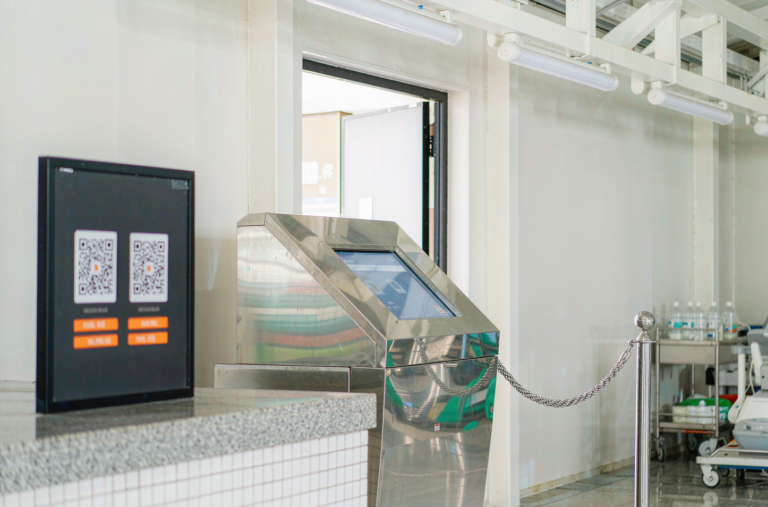
Registration still follows the normal hospital routine: you register at the self-service kiosk or through the hospital’s official app, choose the department, and see the doctor in order. Bring your passport, any previous semen reports, and a list of medications. If your Chinese is limited, arrange an interpreter in advance, because the consultation moves quickly and the vocabulary is specific. If you are entering the country mainly to be treated, sort out the visa paperwork before you fly.
Semen Analysis and What the Numbers Mean
The semen analysis is the foundation. You abstain from ejaculation for two to seven days, produce the sample in a private room at the hospital, and the lab reads it within the hour. The 2021 WHO reference ranges that Chinese labs quote are a concentration of at least 16 million sperm per milliliter, total motility of at least 42 percent, progressive motility of at least 30 percent, and normal morphology of at least 4 percent under strict criteria. Volume should be around 1.5 milliliters or more.
One report is never enough. Sperm counts swing from week to week, so a Chinese andrologist will almost always ask for a second sample at least four weeks after the first, once any infection or illness has cleared. Do not be alarmed by a single low result. I have seen men panic over one borderline analysis that normalized on repeat. The lab also checks for white blood cells, which signal inflammation, and for antibodies that can stick sperm together. A typical analysis costs between 100 and 300 yuan in a public hospital, and results are usually ready the same morning.
Hormone Panels and the Genetic Work-Up
If the count is low or zero, blood tests follow. A follicle-stimulating hormone (FSH) and luteinizing hormone (LH) pair shows whether the brain is pushing the testicles correctly. A low testosterone with normal or low FSH hints at a pituitary issue that may respond to medication. Prolactin is checked because a high level can suppress sperm production. Inhibin B gives an extra read on the cells that make sperm. The panel usually runs 300 to 800 yuan.
For men with very low or absent sperm, genetics matter. A karyotype looks for extra or rearranged chromosomes. A Y-chromosome microdeletion test checks the AZF regions; if they are missing, natural or ICSI conception using the man’s own sperm may be impossible, and donor sperm becomes the realistic route. A cystic fibrosis gene check is ordered when the vas deferens appears absent, because that points to a systemic condition rather than a simple blockage. None of this is optional box-ticking. It directly changes whether a surgeon operates or a counselor discusses donor options.
When a Physical Cause Is Found: Varicocele and Beyond
The most common correctable finding is a varicocele, a bag of enlarged veins above the testicle. It shows up in about one in seven men and in a much larger share of those with a low count. The urologist feels for it standing up and confirms it with a scrotal ultrasound, which costs roughly 150 to 400 yuan. A grade one varicocele is only felt when you strain; a grade three is visible. Not every varicocele needs surgery, but one that is growing, causing pain, or sitting beside a low count is a reasonable candidate for repair.
Repair is done two ways. A surgeon can tie off the veins through a small incision in the groin or lower abdomen, sometimes with a microscope or laparoscope. An interventional radiologist can instead thread a coil from the groin vein up to block the flow, a method called embolization. Both aim to lower the temperature and pressure around the testicle so sperm production improves. If the problem is a blockage, microsurgery can reconnect the vas deferens, and the success rate is high when the tube is healthy and the gap is short.
Treatments Available in Chinese Tertiary Hospitals
Beyond surgery, medical treatment targets the cause. A hormonally driven problem may improve with clomiphene or gonadotropin therapy under specialist supervision. A genital infection with white cells in the sample is treated with a course of antibiotics such as doxycycline, after which the analysis is repeated. Lifestyle changes are not a cure but they remove avoidable drag: stopping smoking, cutting heavy alcohol, losing excess weight, avoiding long sauna or hot-tub sessions, and dropping anabolic steroids. Tight underwear and long laptop-on-lap hours are minor contributors, but easy ones to fix.
When sperm are absent or too few for intercourse to work, sperm retrieval steps in. For a blockage, the doctor can draw sperm directly from the epididymis (PESA) or testicle (TESA) on the day of the partner’s egg collection. For a testicle that makes almost no sperm, microsurgical testicular sperm extraction (micro-TESE) searches the tissue under a microscope for the few tubules that are still active. The retrieved sperm then go to intracytoplasmic sperm injection (ICSI), where one sperm is placed directly into the egg. China runs a large volume of these cycles, and centers such as Peking University Third Hospital in Beijing and Renji Hospital in Shanghai are among the busiest in the world. Our overview of IVF and assisted reproduction in China explains the legal frame: assisted reproduction is offered only to legally married couples, and commercial surrogacy is illegal in China.
Costs You Can Expect
Estimates only — final costs are determined by the hospital.
The basic male work-up is modest. A semen analysis is 100 to 300 yuan, a hormone panel 300 to 800 yuan, and a scrotal ultrasound 150 to 400 yuan. A varicocelectomy in a public tertiary hospital typically lands between 8,000 and 20,000 yuan, depending on whether it is open, microscopic, or laparoscopic, and whether you stay overnight. Micro-TESE is higher, commonly 20,000 to 40,000 yuan, because it is a longer operating-room procedure. The ICSI cycle itself is billed separately by the reproductive medicine center and usually runs 30,000 to 50,000 yuan per attempt, not counting medications. Private international clinics quote several times more but may bundle translation and a single point of contact. The gap between a public hospital and a private suite is the main driver of price, not the medicine.
Planning the Trip: Visa, Interpreters, and Follow-Up
If you are traveling to China for treatment, build the schedule around biology. Sperm take about seventy-four days to form, so a varicocele repair or a lifestyle change needs three to six months before a repeat analysis shows the effect. Plan at least two visits a few weeks apart for the two required semen samples, plus any procedure in between. Most men do the consultation and tests on one trip and return for surgery or retrieval later.
Language is the part foreigners underestimate. The consultation is short and the forms are in Chinese, so a medical interpreter who knows the terms saves real money by preventing repeat tests. Allow time for the partner’s side too if assisted reproduction is likely, because the clinics coordinate both schedules. The same medical visa for China guidance applies whether you are seen in urology or in a reproductive center. And if bladder or prostate symptoms come up during the history, the same hospital’s prostate screening and urology care in China team can fold that into the visit.
Frequently Asked Questions
How long does the full male infertility work-up take?
Realistically two to four weeks for the core tests, because the two semen samples must be at least four weeks apart and hormone and ultrasound results come back within days. If sperm retrieval or surgery is needed, add the procedure and then another three to six months before a repeat analysis reflects any change.
Can I bring a semen analysis from my home country?
You can bring it, and the doctor will read it, but a Chinese reproductive center will usually want at least one fresh sample produced on site before starting a cycle. Lab methods vary, and a local sample removes doubt about transport time and storage.
Is varicocele repair worth it if we are going straight to IVF?
Sometimes. If the count is very low, repair may lift it enough to avoid retrieval, or it may improve the DNA quality of sperm used in ICSI. The decision is made case by case after the ultrasound and hormone picture, not as a routine.
Will my insurance cover any of this?
Coverage varies widely by policy and by whether the visit is inside or outside your home network. Public hospital receipts are itemized and accepted by many international insurers for reimbursement, but confirm pre-authorization first. This is a planning step, not a guarantee of payment.
Planning care in China? Our comprehensive Medical Tourism in China guide covers visas, costs, top hospitals by city, language support, accommodation near hospitals, and insurance.
A Note on Scope and Affiliation
This article is written for general education about how male fertility is evaluated and treated in China. It is not a substitute for a personal diagnosis, and it does not promise a specific outcome for any individual. Test results, treatment choices, and costs differ by hospital, city, and patient history. The author, Karl Huang, serves as technical director at Tianyou Medical Research Institute and as a consultant at Zhong’an Kanghua (ZAKH) outpatient clinics; where a service is mentioned, the affiliation is disclosed and no therapeutic result is guaranteed. For the full medical disclaimer, see our medical disclaimer, and for our sourcing and editorial standards, see the editorial policy.