Peking University Shenzhen Hospital: What Foreign Patients Should Know
Why a “University Hospital” Name Confuses Foreign Patients
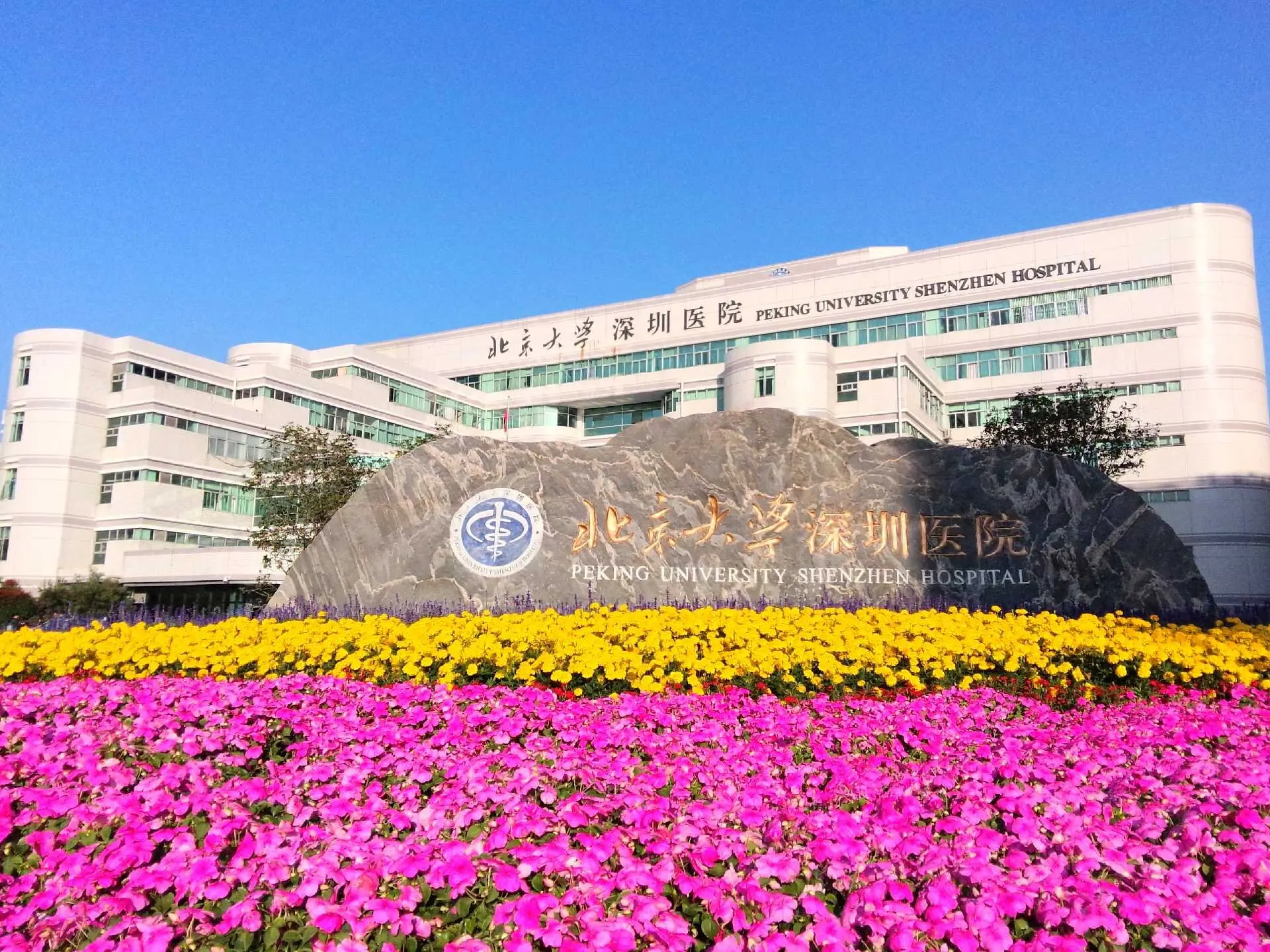
Foreign patients who see “Peking University Shenzhen Hospital” on a referral often assume it is a branch of a Beijing institution or a private university clinic. In the Chinese public system, neither is quite right. The hospital is a public 3A (三级甲等) general hospital in Shenzhen, established through cooperation with Peking University, and the name reflects an affiliation rather than a satellite campus. For someone deciding where to receive care, the useful question is not what the name implies but what the hospital actually does well and how a foreign passport holder is received there.
This article presents Peking University Shenzhen Hospital as one example of a Shenzhen public 3A hospital that foreign patients sometimes use. It is orientation, not an endorsement of any facility, and not medical advice. Treatment decisions should always be made with licensed physicians.
Background and Hospital Status
Peking University Shenzhen Hospital is located in Futian district, the central administrative and business area of the city, which makes it geographically convenient for many visitors staying in the city center. It opened in 1999 as a cooperative project with Peking University, and it carries the 3A grade that marks China’s top tier of public hospitals. As a comprehensive hospital, it is built to handle the full span of general adult care rather than concentrating on a single specialty.
One characteristic worth noting is its high outpatient volume. Large general hospitals in Shenzhen see very heavy daily foot traffic, and this hospital is among those with a substantial everyday load. High volume is a double-edged feature: it means broad experience across common conditions, but it also means the lobbies, registration areas, and waiting rooms are busy, and queues form early. A foreign patient who arrives without a booked slot may face a long wait or find the relevant specialist fully booked for the day.
Key Departments
The hospital’s departments span the usual comprehensive range, with several areas frequently mentioned when the hospital is discussed:
- Orthopedics. The orthopedics service covers joint, spine, and trauma conditions, including surgical and non-surgical management of musculoskeletal problems. Patients with chronic joint pain or sports injuries are commonly referred here. Our guide to joint and orthopedic care in China explains how such visits are typically arranged for foreign patients.
- Urology. The urology department handles kidney, bladder, prostate, and related conditions, both diagnostic and operative. As with other surgical departments, the scope of what can be done depends on the individual case and the equipment available at the time.
- Oncology. Cancer-related care is available through medical and surgical oncology services, coordinated with imaging and pathology. Patients seeking a structured view of oncology in China may also read our cancer care guide for foreign patients.
- Cardiovascular medicine. The cardiology service covers coronary assessment, arrhythmia work-up, and related diagnostics, linking into the broader heart-care pathway shared across the city’s hospitals.
- Obstetrics and gynecology. The hospital maintains an OB/GYN service covering routine gynecology, pregnancy care, and related procedures. This is a standard comprehensive-hospital department; patients with maternity needs should confirm the hospital’s current policies for foreign patients directly.
These descriptions are general. The hospital alone can confirm which specialists are currently seeing patients and what each department offers on a given day.
Advantages and Characteristics
The main advantage of a hospital like this is its comprehensiveness combined with central location. A patient who needs, say, an orthopedic opinion and a separate cardiology check can often have both done within one institution and even on one coordinated day, rather than travelling between facilities. The Peking University affiliation is generally understood to support academic standards and specialist recruitment, though it should be read as a partnership rather than a guarantee of any specific outcome.
The characteristic that most affects foreign patients is the international medical services desk. Larger Shenzhen 3A hospitals increasingly maintain a desk or office to help foreign and overseas patients with registration, billing, and basic navigation. This is a support function, not a separate hospital, and it does not remove the need for in-room interpretation during the consultation. Its value is in smoothing the administrative steps — passport registration, appointment routing, and payment — that otherwise consume a visit day.
For Foreign Patients: Registration, Appointments, and Language
The administrative path is consistent with other Shenzhen public 3A hospitals. Registration begins with the passport: the hospital issues its own local patient record tied to the passport number and the exact name as printed. Getting this right the first time matters, because a mismatch can block test orders and prescription writing later the same day.
Booking is best arranged ahead. The public “健康深圳” (Healthy Shenzhen) mini-program is oriented toward mainland ID numbers and often will not accept a foreign passport directly, so foreign patients usually book through the hospital’s own appointment system or its international desk. Given the hospital’s high outpatient volume, advance booking is not optional advice — it is close to a precondition for being seen by the specialist you need. Our Shenzhen medical escort service can place the booking and handle registration on your behalf.
Language follows the same pattern as elsewhere: consultations are in Mandarin, and reports return in Chinese. Arrange interpretation in advance. The international desk can help at the administrative level, but it does not replace a translator sitting with you and the physician.
Costs and Payment
Pricing at a public 3A hospital follows regional tariffs and is generally lower than at private international clinics for comparable care, but the amount you ultimately pay depends on what is ordered. Consultation tier, imaging, laboratory panels, procedures, medications, and length of stay all affect the bill. Any advance figure is an estimate only, and final costs are determined by the hospital at the point of service. Foreign patients typically pay at the time of care and reclaim from their insurer later, so the itemized invoice and the official fapiao (tax receipt) should be collected before leaving.
Frequently Asked Questions
Is this hospital part of Peking University in Beijing?
It is a Shenzhen public hospital established in cooperation with Peking University. The affiliation supports its academic and clinical profile, but it operates as a local public 3A hospital in Shenzhen, not as a satellite of the Beijing campus. Treat the name as a partnership label rather than a physical branch.
Does the international desk speak English?
Many of the city’s larger hospitals staff their international or medical-services desks with personnel who handle foreign-patient administration, though language capability varies by day and by person. For the consultation itself, do not assume the desk provides in-room interpretation; arrange a translator or coordinator for that part of the visit.
How busy is the hospital, and does that affect my visit?
Outpatient volume is high, which means registration areas and waiting rooms are crowded and specialist slots fill quickly. Booking ahead and arriving with your documents ready are the two steps that most reduce the friction of a busy environment. A coordinator can also route you through the administrative steps more efficiently than navigating alone.
Can I get all my departments seen in one day?
It is sometimes possible at a comprehensive hospital, especially with advance coordination that books morning and afternoon slots in different departments. Whether it works depends on what tests are ordered and how long results take. Discuss a realistic sequence with your coordinator rather than assuming everything fits into a single morning.
Related Hospitals in Shenzhen
Foreign patients often compare several hospitals before deciding where to be seen. These Shenzhen 3A hospitals are commonly considered alongside Peking University Shenzhen Hospital:
- The Eighth Affiliated Hospital of Sun Yat-sen University — A SYSU-affiliated district 3A hospital with comprehensive, orthopedic, and oncology services.
- The University of Hong Kong–Shenzhen Hospital — A HKU-operated hospital known for package pricing and a foreigner-friendly, bilingual environment.
- Shenzhen People’s Hospital — Shenzhen’s first 3A hospital, with broad strengths in cardiology, hepatobiliary surgery, and oncology.
Related Reading
A Note on Scope
This article describes how visiting Peking University Shenzhen Hospital generally works for foreign patients in China and is provided for general information only. It is not medical advice and is not a guarantee of any hospital’s availability, pricing, or outcomes. Treatment decisions should always be made with licensed physicians. For our general position, see the medical disclaimer.
If you want help coordinating a hospital visit in China, our Shenzhen medical escort team can handle appointment booking, passport registration, and in-hospital accompaniment. Start with a planning conversation.