Hysteroscopy in China for Foreigners: Diagnostic and Surgical Pathways
Why Foreign Patients Consider Hysteroscopy in China
A hysteroscopy is a minimally invasive look inside the uterine cavity using a thin telescope passed through the cervix. For many foreign women living in or travelling to China, it becomes the next step after an ultrasound shows something a doctor wants to see directly: a polyp, a fibroid pressing into the cavity, an irregular lining, or unexplained bleeding. I have sat with patients in Shenzhen clinics at eight in the morning who arrived with a translated copy of an overseas report and left with a clear plan for the same week. China’s tertiary hospitals run these procedures every day, and the wait for a diagnostic scope is often shorter than what patients describe back home.
The appeal is practical rather than exotic. The equipment is standard, the doctors are busy and experienced, and the cost sits well below private rates in Western Europe or North America. What trips up first-time medical travellers is rarely the procedure itself. It is the language on the consent form, the Chinese-only pathology report, and the question of which visa actually covers a treatment stay. This guide walks through all of it.
What Hysteroscopy Actually Is: Diagnostic Versus Operative
The instrument is a hysteroscope, a rigid or flexible tube 2.9 to 5 millimetres wide fitted with a camera and a working channel. A diagnostic hysteroscopy is exactly that, a visual inspection, usually under light sedation or local anaesthetic, and it lasts ten to twenty minutes. An operative hysteroscopy adds instruments through the same channel to remove a polyp, resect a submucosal fibroid, take a targeted biopsy, or divide intrauterine adhesions. The distinction matters for your budget and your recovery, so it is worth knowing which one your doctor is planning before you book the flight.
At most Chinese public tertiary hospitals the two are frequently combined. If the pre-operative scan suggests a lesion, the team schedules an operative slot rather than making you return for a second admission. Private international clinics more often keep them separate, giving you a calmer diagnostic visit first and booking the operative part only after you have reviewed the findings. Neither approach is right or wrong; they simply trade speed against a slower, more staged experience.
Anaesthesia deserves a sentence on its own. Diagnostic scopes are commonly done with paracervical local anaesthetic plus oral sedation. Operative cases use either spinal or general anaesthesia, decided by the expected duration and the patient’s history. If you take blood-thinning medication, tell the doctor at the first consult, because many clinics ask you to pause it for five to seven days before an operative scope.
Conditions That Lead to a Hysteroscopy Referral
The reasons are ordinary rather than rare. Abnormal uterine bleeding after age 40. Post-menopausal spotting. A polyp seen on a pelvic ultrasound. A submucosal fibroid measured at two centimetres. Repeated implantation failure during fertility treatment. Suspected intrauterine adhesion after a previous procedure. Each of these has its own management path, and the hysteroscopy is the tool that confirms what the scan only hinted at.
Women researching a fibroid that bulges into the cavity can read about uterine fibroids treatment in China for the broader picture, and those who had an ovarian mass found on the same scan may want the ovarian cyst treatment in China overview before the appointment. Bringing both reports to one consult saves a return visit and lets the gynaecologist plan a single theatre session if more than one issue needs attention.
The Patient Pathway, Step by Step
The sequence below is what a straightforward case looks like in a public tertiary hospital. Private clinics compress some steps but follow the same clinical logic.
- Referral and consultation. You meet a gynaecologist, usually in the gynaecology or reproductive medicine outpatient clinic of a tertiary hospital. Bring prior scans on a USB stick or printed film. In many hospitals a transvaginal ultrasound is done the same morning.
- Pre-operative checks. A blood count, a coagulation screen, and sometimes an ECG. A negative pregnancy test is required if you are of reproductive age. These are typically completed one to three days before the procedure.
- The procedure day. Nothing by mouth for six to eight hours if general anaesthesia is planned; diagnostic scopes under local anaesthetic need only a short fast. You change into a gown, the scope passes through the cervix with saline distension, and the doctor views the cavity on a monitor.
- Recovery. You rest one to two hours in an observation area, then a companion walks you out. Operative cases may keep you four to six hours or admit you overnight if the resection was extensive.
- Pathology and report. Any tissue sent for histology returns in five to seven working days. The written report is in Chinese; an English translation of the key findings is something you should request explicitly before you leave the hospital.
Where the Procedure Is Done: Departments and Hospital Tiers
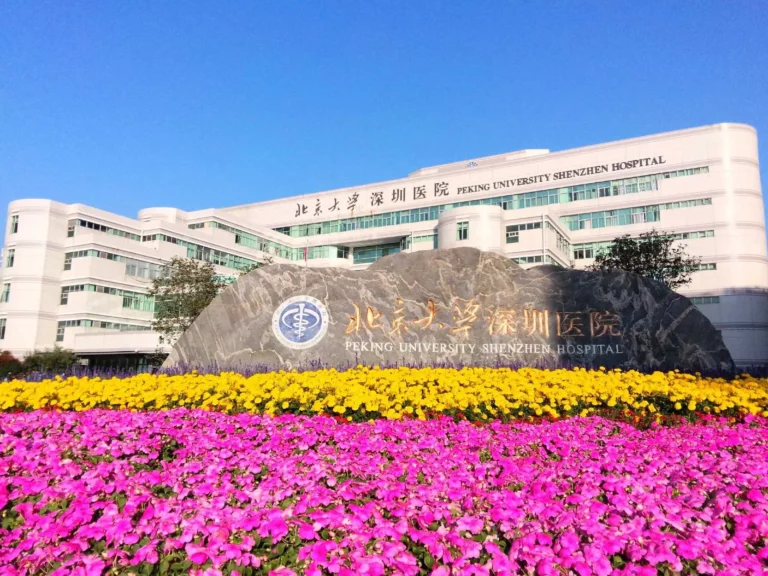
In China this work lives inside the gynaecology and obstetrics department of a Grade III Class A hospital, or inside a reproductive medicine centre. Major centres perform these procedures in volume: Peking Union Medical College Hospital in Beijing, the Fudan University-affiliated women’s hospitals in Shanghai, and the large public maternity and women’s hospitals in Guangzhou and Shenzhen each handle hundreds per month. International clinics in tier-one cities offer the diagnostic version with English-speaking staff but usually refer operative cases to a partner hospital.
The trade-off is price and language comfort versus scale and equipment depth. A busy public centre may have you navigating a crowded registration hall and a Chinese consent form, but it will have seen your exact situation many times. A private clinic gives you an interpreter in the room and a quieter corridor, at a premium. Neither is unsafe; they serve different tolerance for hassle and budget.
What It Costs and How Payment Works
Prices vary by city and hospital tier. A diagnostic hysteroscopy in a public tertiary hospital often falls in the range of RMB 1,500 to 4,000 including the consult and ultrasound. An operative hysteroscopy with polyp or fibroid resection commonly lands between RMB 6,000 and 18,000, anaesthesia and histology included. Private international clinics quote higher, sometimes RMB 12,000 to 30,000 for the diagnostic procedure alone.
Estimates only – final costs are determined by the hospital. Foreign patients pay at registration or settle by card at the cashier; some hospitals require a deposit for operative bookings. Travel and accommodation are separate line items. If you carry international health insurance, ask the insurer before you travel whether they need a pre-authorisation letter, and read the separate guide on the medical visa for China if your stay stretches beyond a tourist window, because a treatment stay longer than a standard visit can touch immigration rules.
Recovery, Follow-Up and Travelling Home
Most diagnostic patients can fly home within forty-eight hours. After an operative resection, doctors usually recommend seven to ten days before a long-haul flight, and you should avoid tampons, swimming, and intercourse for two weeks. Light spotting for a few days is normal and not a reason to worry. A follow-up scan at four to six weeks is standard if a fibroid or adhesion was treated.
Keep the Chinese histology report and ask the clinic to email a short English summary so your home gynaecologist can act on it without delay. The hysteroscopy images are usually saved as a file you can take on a USB stick; take them. A home doctor is far more reassured by the actual photos than by a one-line translation.
Language, Medical Records and the Visa Question
The single biggest friction point is not the medicine. It is the paperwork. Consent forms, discharge summaries, and pathology reports are issued in Chinese. A certified English translation of the discharge summary and the histology result protects you if you need care at home, and it is far easier to arrange while you are still in the country than to chase months later from abroad. The same goes for the formal invitation letter some embassies want: ask the international patient office to issue it on hospital letterhead at the time of booking, not the day before your flight.
For stays longer than a tourist visa allows, the realistic options run through the ordinary classifications. China has no dedicated medical visa category, and most patients use an M, S2, or L classification depending on whether the visit is business-linked, family-linked, or a straightforward tourist entry that happens to include treatment. Planning this early removes a surprising amount of stress from the trip.
Frequently Asked Questions
Is hysteroscopy painful?
A diagnostic scope under local anaesthetic feels like strong period cramps for a minute or two. General anaesthetic removes the sensation entirely for operative cases. Most patients describe the anticipation as worse than the procedure, and the cramping settles within an hour of waking.
How long does the whole hospital visit take?
Diagnostic: about half a day including registration and recovery. Operative: plan a full day, occasionally an overnight stay. Booking to procedure in a public tertiary hospital is often three to ten working days; private clinics can be next-day if the pre-op labs are already in hand.
Can I combine the consultation and procedure in one trip?
Yes, and many medical travellers do exactly this. Bring your overseas ultrasound on a USB or printed film, request the consult and pre-op labs early in the week, and an operative slot can often be arranged within the same visit. Build buffer days into your ticket so a delayed pathology result does not strand you.
Will my home doctor accept the Chinese report?
They will, provided it is translated and shows the histology conclusion. Ask the Chinese hospital for the original signed pathology report plus an English summary, and keep the images. A home gynaecologist cares about the tissue diagnosis and the photos, not the hospital’s letterhead.
Planning care in China? Our comprehensive Medical Tourism in China guide covers visas, costs, top hospitals by city, language support, accommodation near hospitals, and insurance.
A Note on Scope and Affiliation
This article is written for general education about how hysteroscopy is accessed by foreign patients in China. It is not a substitute for a consultation with a qualified gynaecologist, and it does not recommend any specific hospital or guarantee a particular outcome. Cost ranges are indicative only and exclude travel, accommodation, and any complications requiring extended care. Where this site references affiliated service providers, that relationship is disclosed per our editorial policy. For the full medical disclaimer, see our medical disclaimer, and for how we source and review content, our editorial policy.