Asthma Treatment in China for Foreigners: Clinics, Inhalers and Daily Management
Asthma Treatment in China for Foreigners: What You Actually Need to Know
If you manage asthma and you are planning to live, work, or spend an extended period in China, the single most useful thing you can do before you fly is line up your inhalers and understand how the local system works. China has a deep, well-organized respiratory medicine network, and most foreign patients are surprised by how quickly they can be seen once they know where to go. This guide walks through departments, bookings, the medicines you will find on pharmacy shelves, customs rules for bringing your own devices, and the day-to-day habits that keep flares quiet. It is written from the perspective of someone who helps overseas patients navigate Chinese hospitals every week.
How Asthma Care Is Organized in China
China runs a tiered public hospital system anchored by large tertiary hospitals in every provincial capital and major city. Respiratory medicine is a standard department in these hospitals, and it handles asthma, chronic cough, and related breathing problems as routine outpatient work. In tier-1 cities such as Beijing, Shanghai, Guangzhou, and Shenzhen you will also find international clinics with English-speaking physicians, which some foreigners prefer for a first visit.
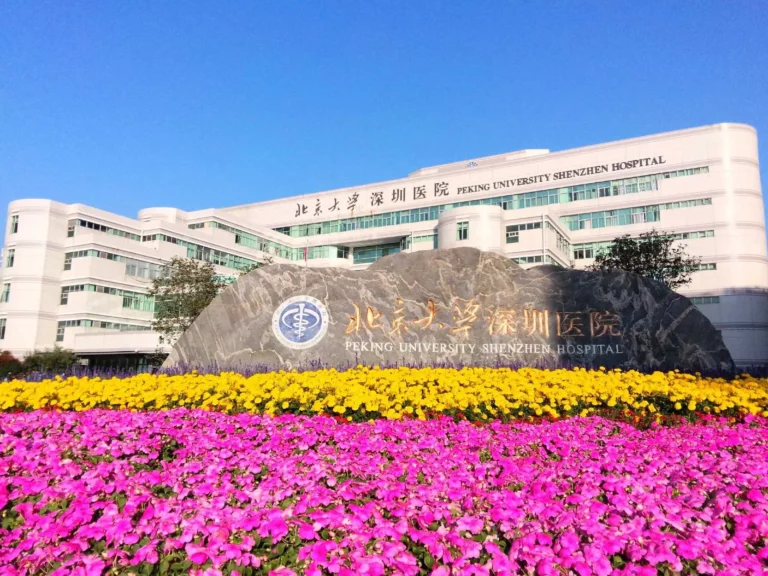
The practical point is that asthma is treated as a regular chronic condition here, not something exotic. A general physician can start you on a reliever inhaler, but for a proper diagnosis and a stepwise plan you want a respiratory specialist. Public tertiary hospitals such as Peking Union Medical College Hospital in Beijing, Ruijin Hospital in Shanghai, and Shenzhen People’s Hospital all run established respiratory outpatient clinics that see foreign patients routinely.
For longer-term conditions, many patients also benefit from a structured plan under chronic disease management in China, where follow-up visits, repeat lung-function tests, and prescription refills are scheduled so nothing falls through the cracks.
Which Department to Book
When you arrive, head to the respiratory medicine department, sometimes labeled pulmonology or chest medicine. Avoid the emergency room unless you are actively struggling to breathe — the ER is for crises, not routine adjustments.
At a public hospital the flow is usually: register at the front desk or hospital app, pay a registration fee, then wait for your number on the department screen. Specialists are sorted by seniority — a chief physician, an associate chief, or an attending physician. For stable asthma an attending or associate chief is perfectly adequate and usually easier to book. If you want an English-speaking doctor, ask the international patient desk or a medical concierge to match you; many tertiary hospitals now keep a short list of clinicians comfortable with English consultations.
Your First Appointment: What to Bring
Bring three things and your life gets much easier:
- Your current inhalers, in their original boxes, so the doctor can read the exact molecule and dose.
- A short summary from your home physician: diagnosis, current step of treatment, last lung-function numbers if you have them, and any allergies.
- Your passport and, if you have one, a local phone number and a payment method accepted at the hospital.
Expect a clinical work-up that often includes spirometry, a breathing test measuring how much and how fast you exhale, plus a fractional exhaled nitric oxide test that estimates airway inflammation, and sometimes a chest X-ray to rule out other causes of cough. None of these are invasive, and results usually come back the same visit.
Inhalers and Medicines You Can Get in China
China stocks the full modern asthma toolkit. You will recognize the molecules even if the brand names on the box look unfamiliar.
Reliever inhalers use short-acting beta-agonists such as salbutamol; these are the devices you reach for when breath gets tight. Controller inhalers use inhaled corticosteroids such as budesonide or beclometasone to quiet underlying inflammation. Combination inhalers pair an inhaled corticosteroid with a long-acting partner such as formoterol or salmeterol, and these are the workhorses for daily control. Oral leukotriene modifiers such as montelukast are common add-ons, and severe cases may be discussed for biologic therapies at major academic centers.
Prices sit well below what many foreigners expect. A salbutamol metered-dose inhaler often runs roughly 20 to 50 yuan. An inhaled corticosteroid inhaler might be 60 to 150 yuan. A combination inhaler is commonly 120 to 350 yuan. A specialist consultation at a public tertiary hospital frequently lands between 200 and 600 yuan for a first visit that includes basic tests, while a lung-function test alone is often 150 to 400 yuan. At a private international clinic the same consultation can be 800 to 2,000 yuan.
Estimates only — final costs are determined by the hospital.
A helpful habit: photograph the active ingredient on your home inhaler and show it to the pharmacist. Chinese pharmacies stock both imported and domestic versions, and a pharmacist can usually match you to an equivalent molecule even when the brand differs.
Bringing Your Own Inhalers Into China
Most foreigners do not need to panic about customs. Personal-use inhalers in original packaging, carried with you or in checked luggage, are normally treated as personal medication. Keep them in their branded boxes rather than loose in a toiletry bag, and travel with a copy of your prescription or a letter from your doctor stating the medical need. Quantities should be clearly for personal use — a reasonable supply for the length of your trip plus a buffer is the safe rule, not a suitcase full of devices.
If you rely on a specific brand that is hard to find locally, bring enough to cover your stay, then use a local prescription to switch to an equivalent molecule once you are settled. Our page on prescription medicine rules in China covers documentation and border practicalities in more detail, and it is worth a read before you pack.
Day-to-Day Management and Trigger Control
China’s environment varies sharply by season and city, and trigger control is where foreign patients quietly win or lose. Winter heating in northern cities pushes indoor dryness and outdoor haze; spring brings high pollen in many regions; summer humidity feeds dust mites. Practical moves that help:
- Run a HEPA air purifier in your bedroom, especially in cities with heavy winter haze.
- Keep your reliever inhaler in your daypack and your controller inhaler on a fixed morning or evening routine so doses are never missed.
- Ask your doctor about a written action plan with clear steps for green, yellow, and red zones — many Chinese respiratory clinics will write one if you ask.
- Track your peak flow or symptoms in a phone note; showing a two-week trend at follow-up makes dose adjustments far more precise.
The goal is boring consistency: same time, same device technique, same trigger avoidance. That routine, more than any single drug, is what keeps emergency visits away.
When an Asthma Attack Happens
An asthma attack is the one scenario where hesitation costs you. If you are using your reliever more than usual, speaking in short sentences, or feeling your chest lock up, that is red-zone territory. Use your reliever immediately, sit upright, stay calm, and if it does not ease within minutes get to an emergency department.
China’s public hospitals run 24-hour emergency departments, and major cities have ambulance services reachable by the local emergency number. For foreigners, knowing where the nearest ER is before you need it removes panic from the equation. Our guide to emergency medical care in China explains how to reach help, what to say, and how payment and translation work when you arrive in distress.
Language, Translation and Escorts
The biggest friction for many foreigners is not the medicine — it is the paperwork and the waiting-room choreography. Hospital signs, app screens, and prescription labels are in Chinese, and while younger doctors often speak workable English, the registration kiosk will not.
Two options work well. You can use a translation app for simple exchanges, or you can bring a medical interpreter or escort who knows the hospital layout. A good interpreter does more than translate words: they confirm the doctor understood your dose history, they read the prescription back to you, and they make sure the pharmacy gives you the right device. If your Chinese is limited, arranging this for the first one or two visits pays for itself in avoided mistakes.
Frequently Asked Questions
Can I see an English-speaking doctor for asthma in China?
Yes. International clinics in Beijing, Shanghai, Guangzhou, and Shenzhen employ English-speaking physicians, and many public tertiary hospitals have an international patient desk that can route you to a clinician comfortable in English. Expect to pay more at private clinics, but the consult is straightforward.
Are my home-country inhalers the same as what I will get in China?
The active molecules are the same — salbutamol, budesonide, fluticasone, formoterol, montelukast and others are all available — but the box may carry a Chinese or multinational brand name you do not recognize. Match by ingredient, not by color or brand, and a pharmacist can help.
How fast can I get an appointment?
At public hospitals you can often be seen the same day for an outpatient respiratory visit, though popular specialists book out days or weeks. International clinics usually offer appointments within a few days. For a sudden attack, the emergency department is immediate.
Will my travel insurance cover asthma care in China?
It depends on your policy. Many travel and expatriate plans cover outpatient respiratory care and approved inhalers, but pre-existing condition clauses vary. Carry your insurance details and confirm coverage with your insurer before you need it; this guide is not a substitute for your policy terms.
Planning care in China? Our comprehensive Medical Tourism in China guide covers visas, costs, top hospitals by city, language support, accommodation near hospitals, and insurance.
A Note on Scope and Affiliation
This article is written for general education about accessing asthma care in China. It does not create a doctor-patient relationship, and it is not a substitute for personalized medical advice. Asthma severity and the right step of treatment differ from person to person, so always follow the plan set by your own physician. The author, Karl Huang, serves as technical director at Tianyou Medical Research Institute, a certified health manager, a China medical escort, and a consultant at Zhong’an Kanghua Clinic; where Zhong’an Kanghua services are mentioned, the affiliation is disclosed and no treatment outcome is promised. Medication names, availability, and prices change, and hospital policies differ by city. For the full medical disclaimer see our medical disclaimer page, and for how we source and review content see our editorial policy.
Estimates only — final costs are determined by the hospital.